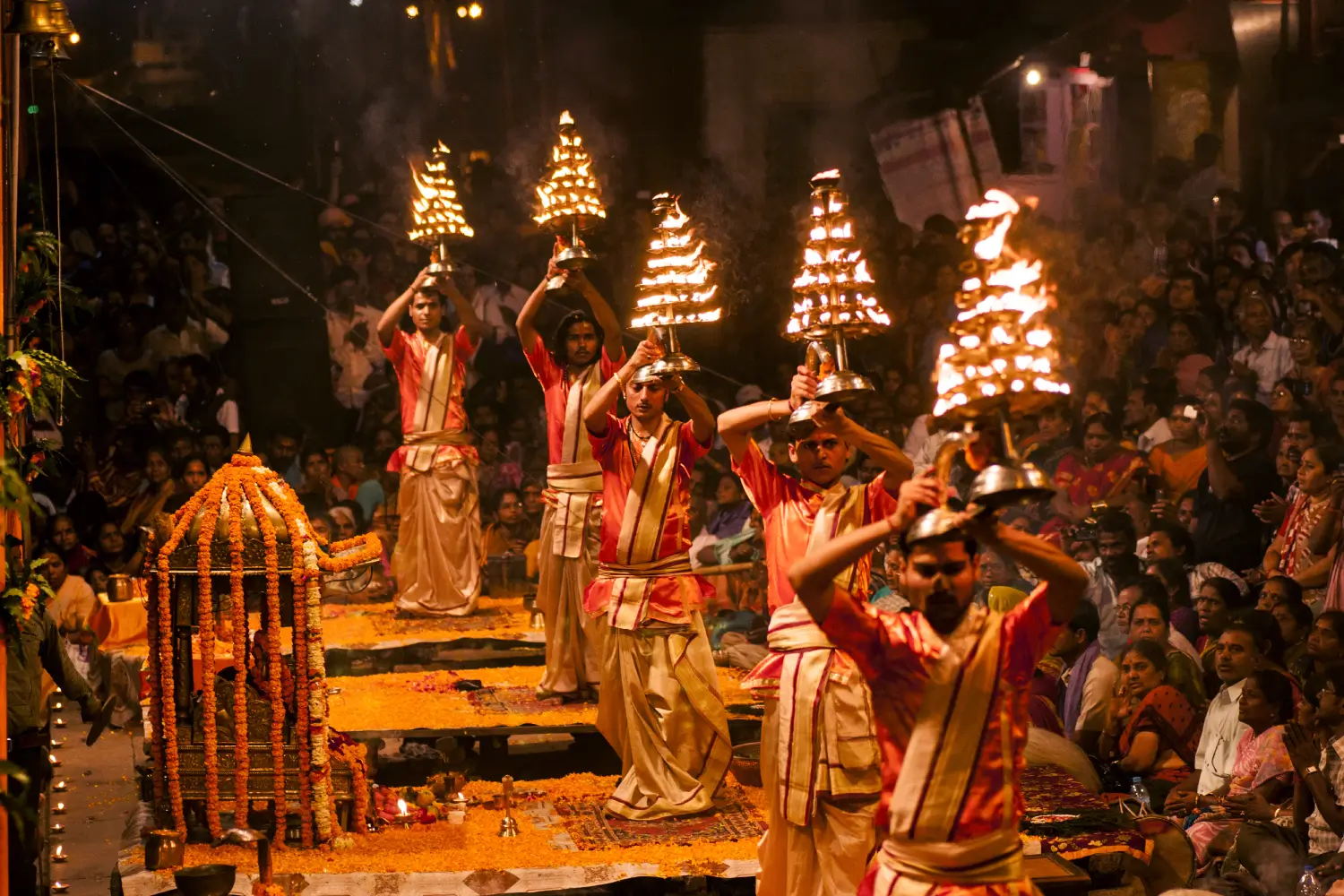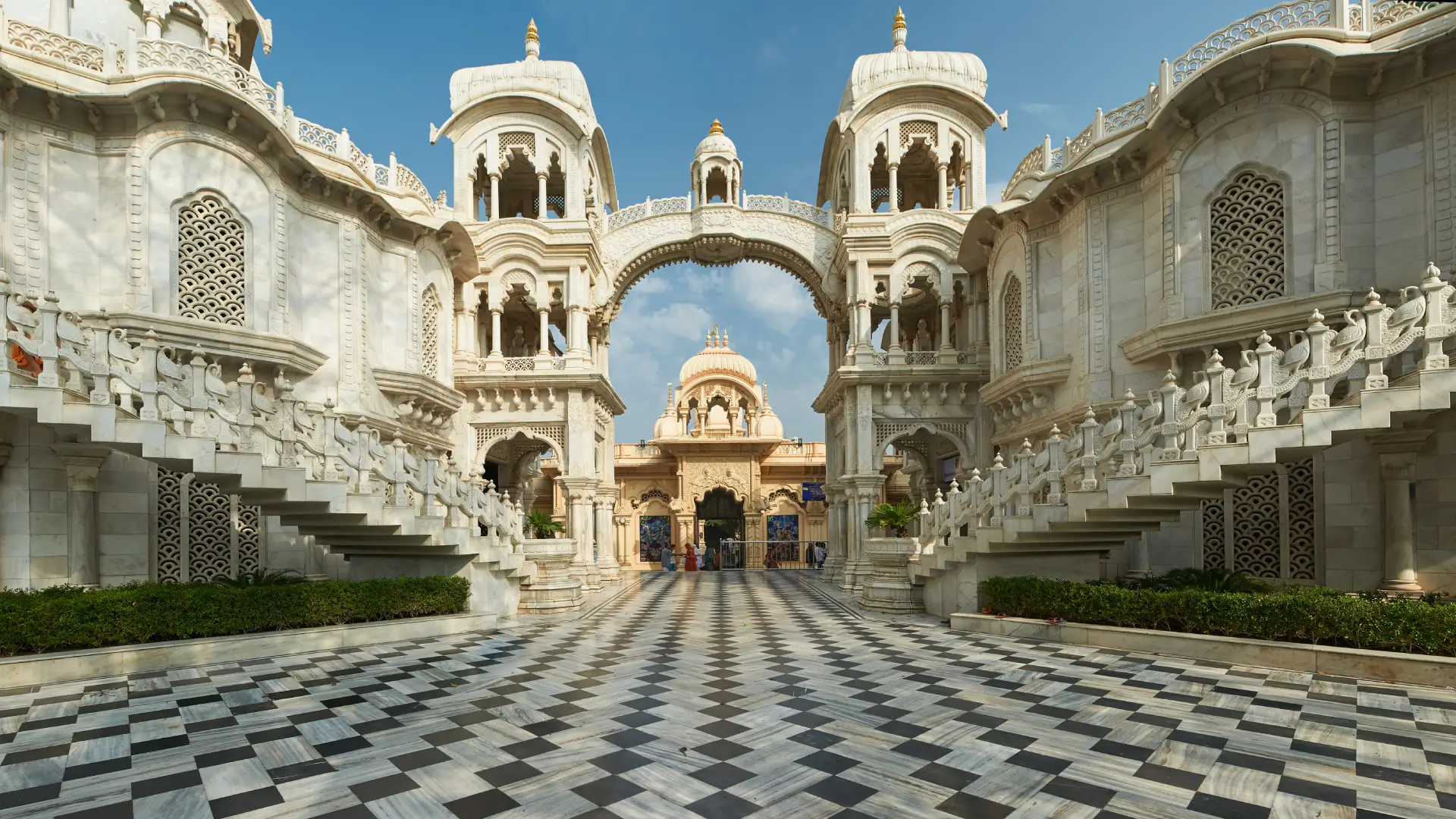
Visiting Vrindavan after Ayodhya feels entirely different. Here, devotion doesn't stay within temple walls. It moves through the streets, carried in bhajans, chants, and the steady flow of people moving from one shrine to another. The experience begins as soon as you enter the lanes, not when you reach a temple.
In Vrindavan, you don't move between places; you move through a continuous atmosphere of devotion.
Why Visit Vrindavan ?The popular points of tourist interests and top experiences in Vrindavan are Shree Sri Krishna Balaram Mandir (ISKCON Vrindavan), Shri Radha Madan Mohan Temple, Chaitanya Mahaprabhu, Sri Radha Raman Mandir, Banke Bihari Temple in Nidhivan, Prem Mandir, Radha Damodar Temple, Radha Vallabh Temple and many more.
Banke Bihari Temple is the most visited temple in Vrindavan. As the curtains open, chants of "Banke Bihari ji ki Jai" rise sharply, and the crowd surges forward for a few seconds before settling again.
The darshan here is unlike most temples :
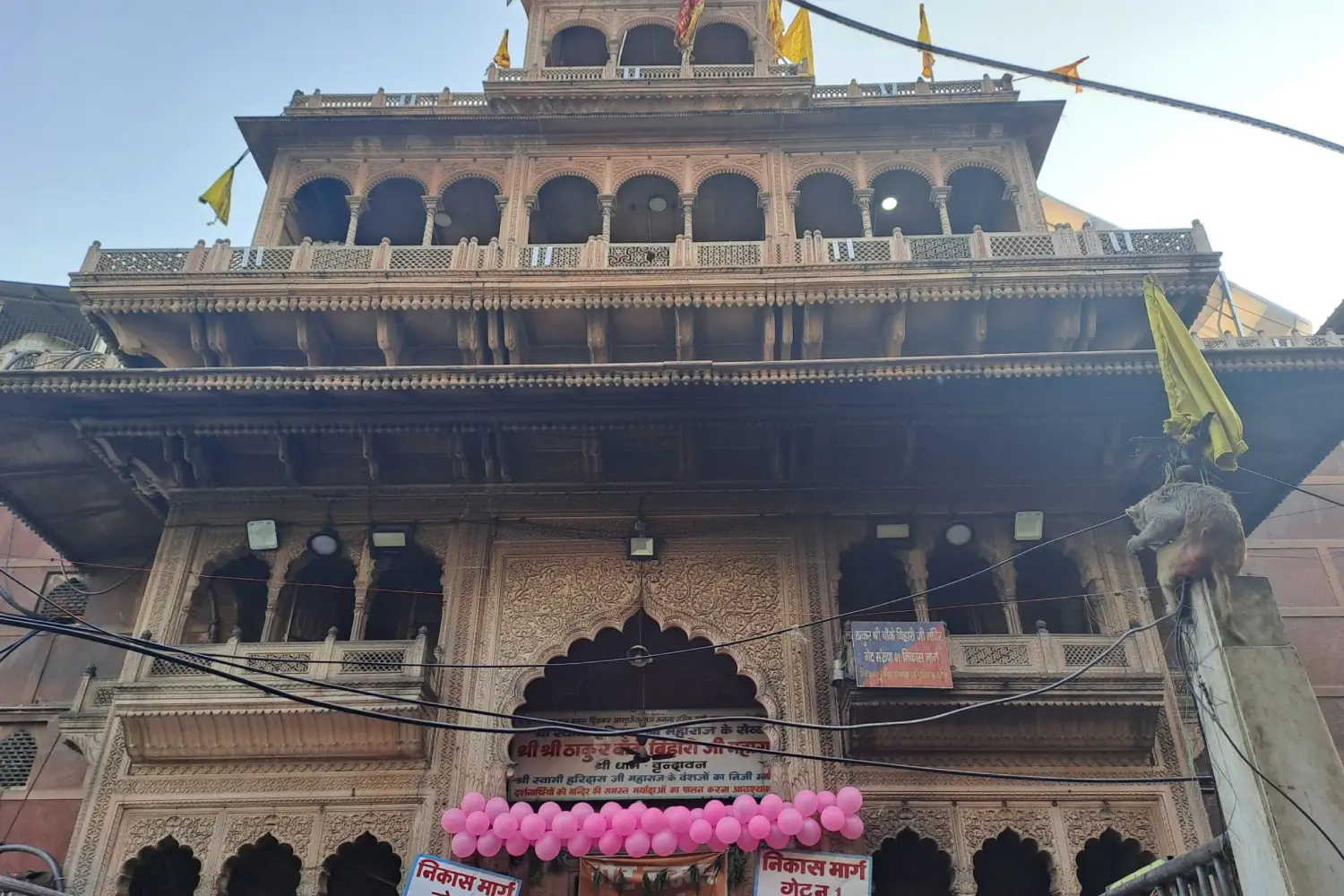
This is not a quiet darshan. It's fast, close, and highly engaging.
Banke Bihari Temple darshan tips : Visit early morning or late evening to manage crowd density and avoid peak surges during curtain openings.
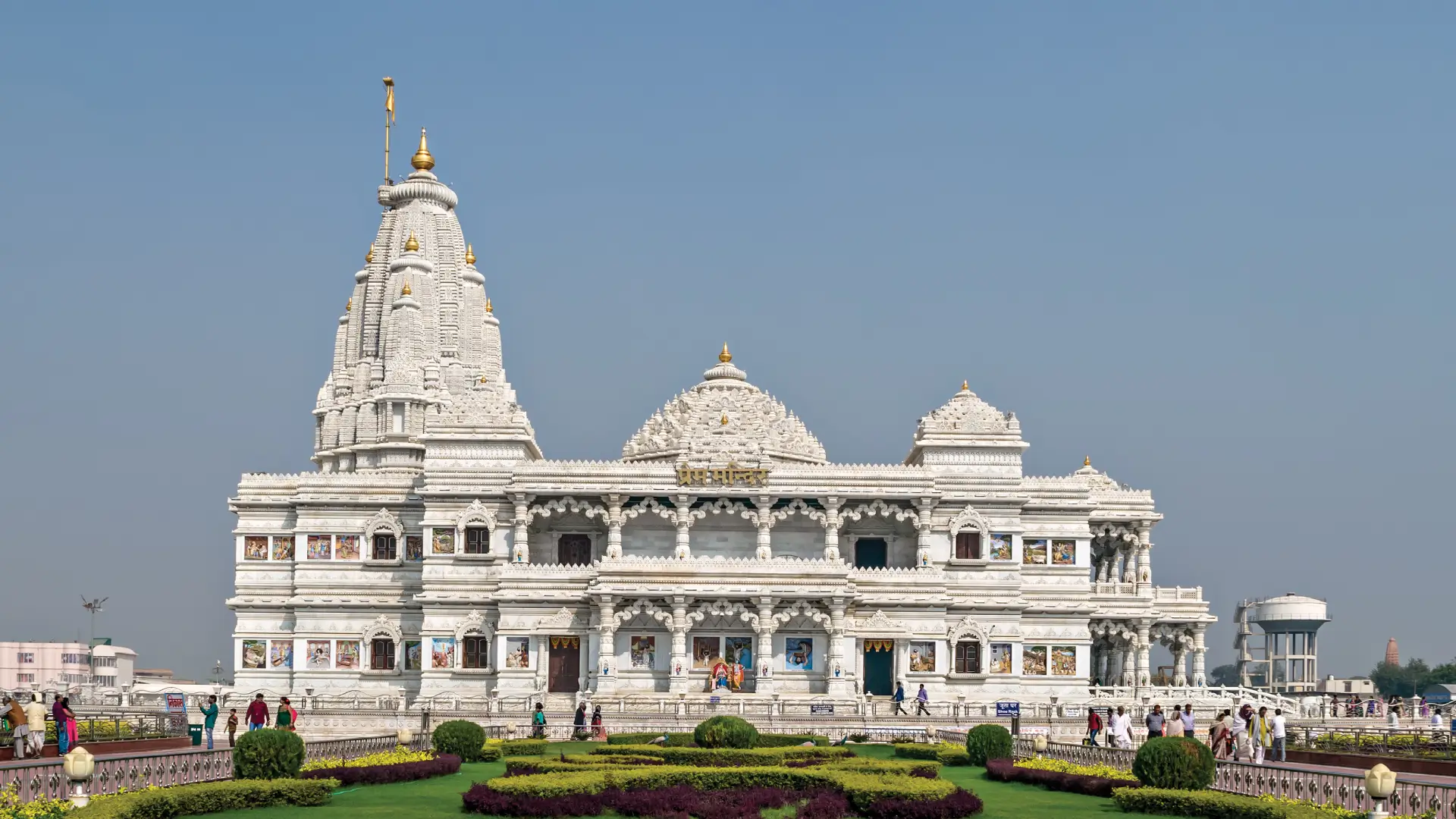
Unlike the older temples of Vrindavan, Prem Mandir feels expansive and carefully choreographed.
As evening sets in, the white marble complex begins to glow under changing lights, while the musical fountain brings episodes from Krishna's life to life through synchronised water, sound, and narration.
This is less about intense darshan and more about visual storytelling and atmosphere.
Practical Tip : Arrive around sunset to experience both the daylight carvings and the evening illumination.
ISKCON Temple Vrindavan offers a noticeably different rhythm from the rest of the Vrindavan temples.
Here, the experience is structured but still immersive :
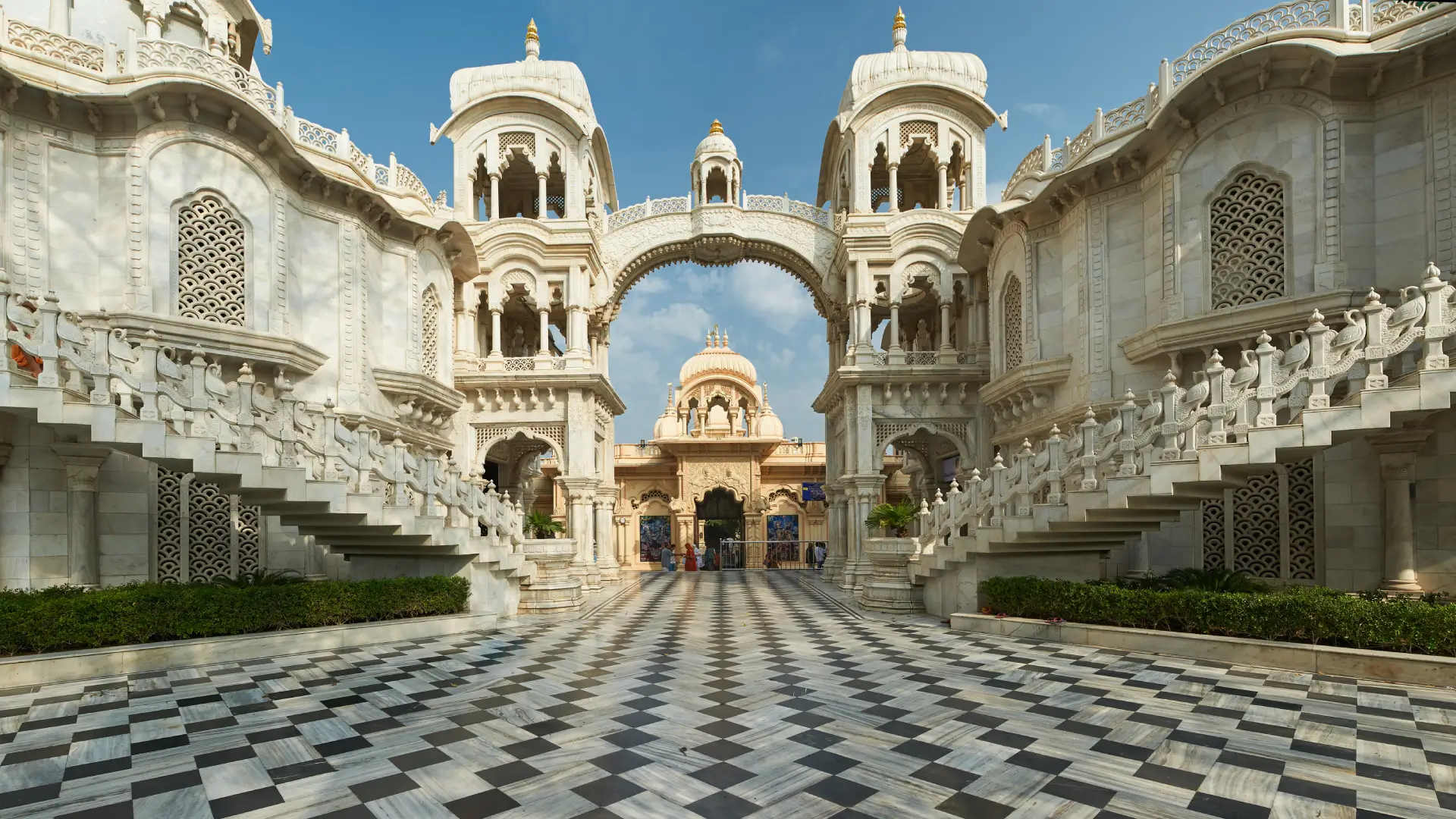
The atmosphere feels more global, with many international devotees, well-managed spaces, and predictable schedules.
Ideal if you want to experience Vrindavan's devotion without navigating intense crowd surges or unstructured temple movement.
Practical Tip : Plan your visit to ISKCON during aarti or kirtan timings to experience the space at its most vibrant.
Seva Kunj and Nidhivan are associated with Krishna's Raas Leela. Local belief holds that Krishna and Radha still perform Raas Leela here at night, which is why entry is restricted after evening.
These areas are quieter and carry strong local beliefs :
Even if you're not familiar with the stories, the shift in tone is evident.
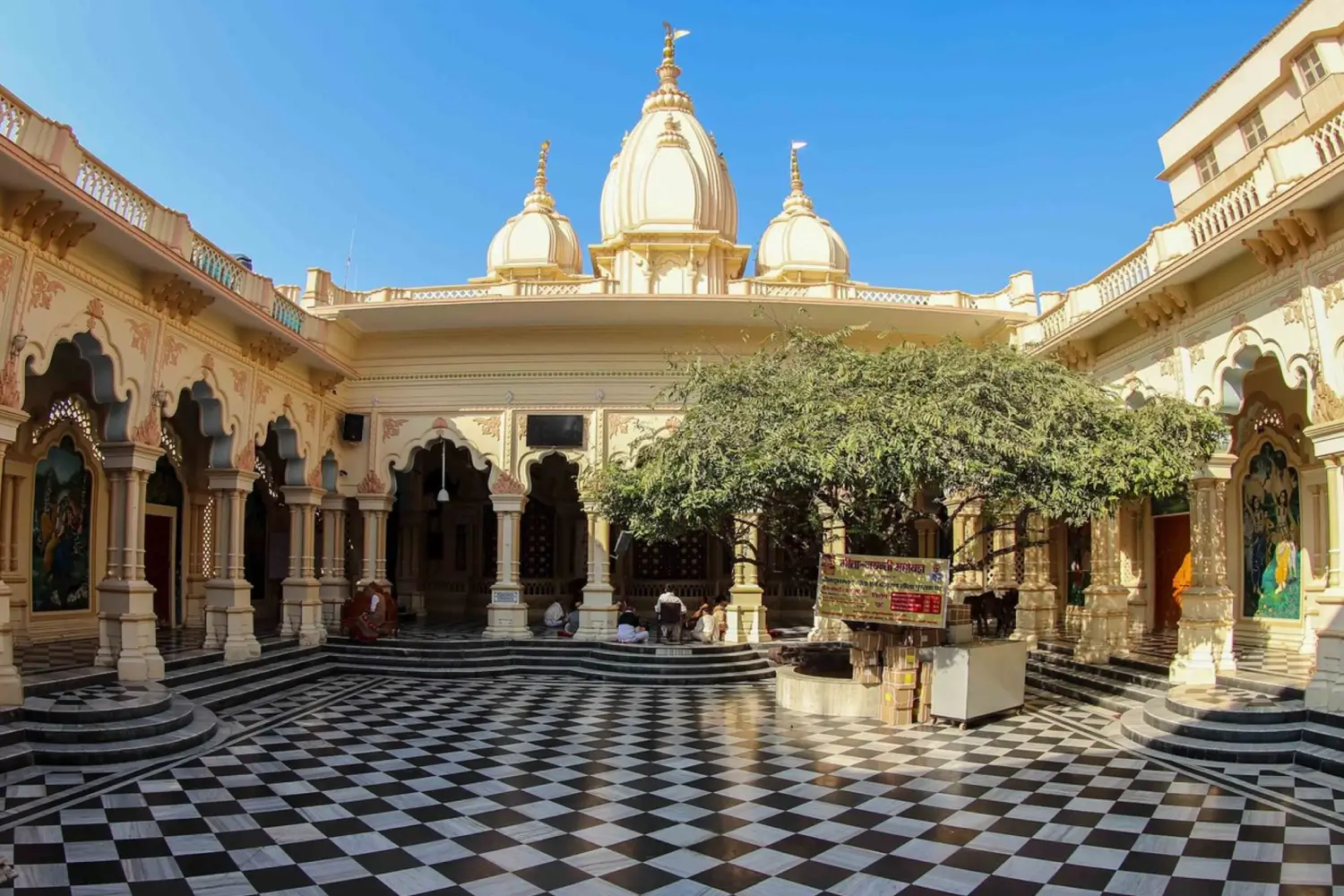
In Vrindavan, walking is part of the experience. As you move through the lanes, small temples appear unexpectedly between shops and houses, the scent of incense and flowers drifts through the air, and bhajans blend into the background. Devotees walk alongside you, often chanting as they go, making the entire town feel like it is in motion.
The traditional parikrama route in Vrindavan takes this a step further, where the act of walking itself becomes devotional.
You're not moving between temples; you're moving within the experience of the town.
Where to Stay in Vrindavan (Quick Guide) ?| Preference | Area | What to Expect |
|---|---|---|
| Close to temples | Near Banke Bihari / old town | Walking access, crowded |
| Comfortable stay | Around ISKCON / Raman Reti | Better hotels, more organised |
| Budget stays | Across town | Basic facilities, varying quality |
Vrindavan is typically visited along with Mathura, located about 15 km away.
From Mathura :Monkey Activity (The "Spectacle"Reality) : Monkeys in Vrindavan are known to snatch spectacles and sunglasses directly from your face, often holding them until offered food in return.
Pro Tip :The "Afternoon Pause" Reality : Most temples close between 12:00 PM and 4:00 - 4:30 PM.
Plan your day accordingly :| Destination | Spiritual Focus | Experience Type | Role in Journey |
|---|---|---|---|
| Ayodhya | Devotion (Ram) | Temple darshan | Beginning |
| Vrindavan | Emotional Bhakti (Krishna) | Temple + street devotion | Immersion |
| Haridwar | Ritual | Ganga participation | Action |
| Varanasi | Intensity | Temples + Ganga | Depth |
Temple timings in Vrindavan, narrow lanes, and constant crowds can make visiting overwhelming without planning.
Call +919212553109 to plan your Mathura - Vrindavan visit, including the following:
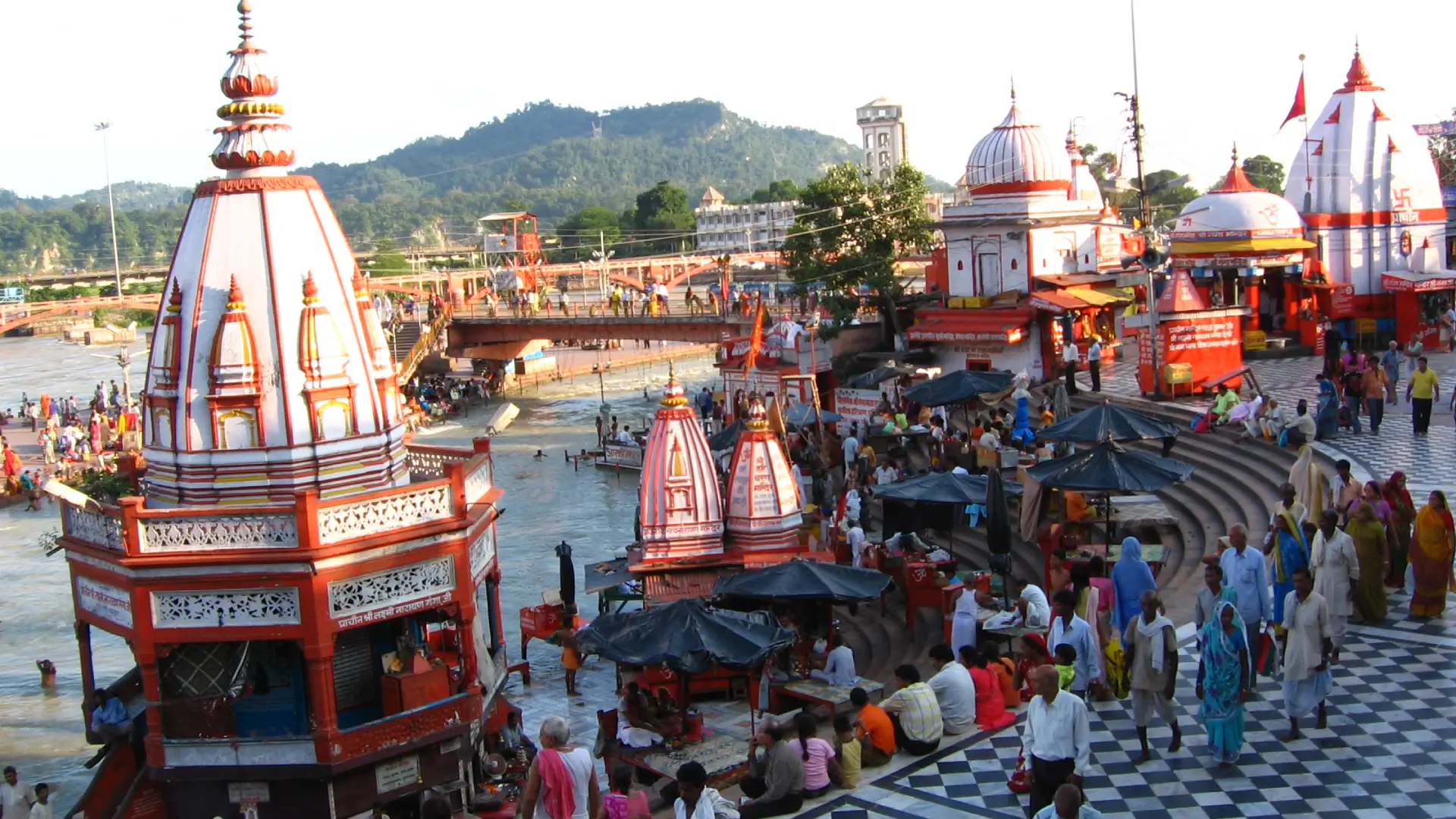
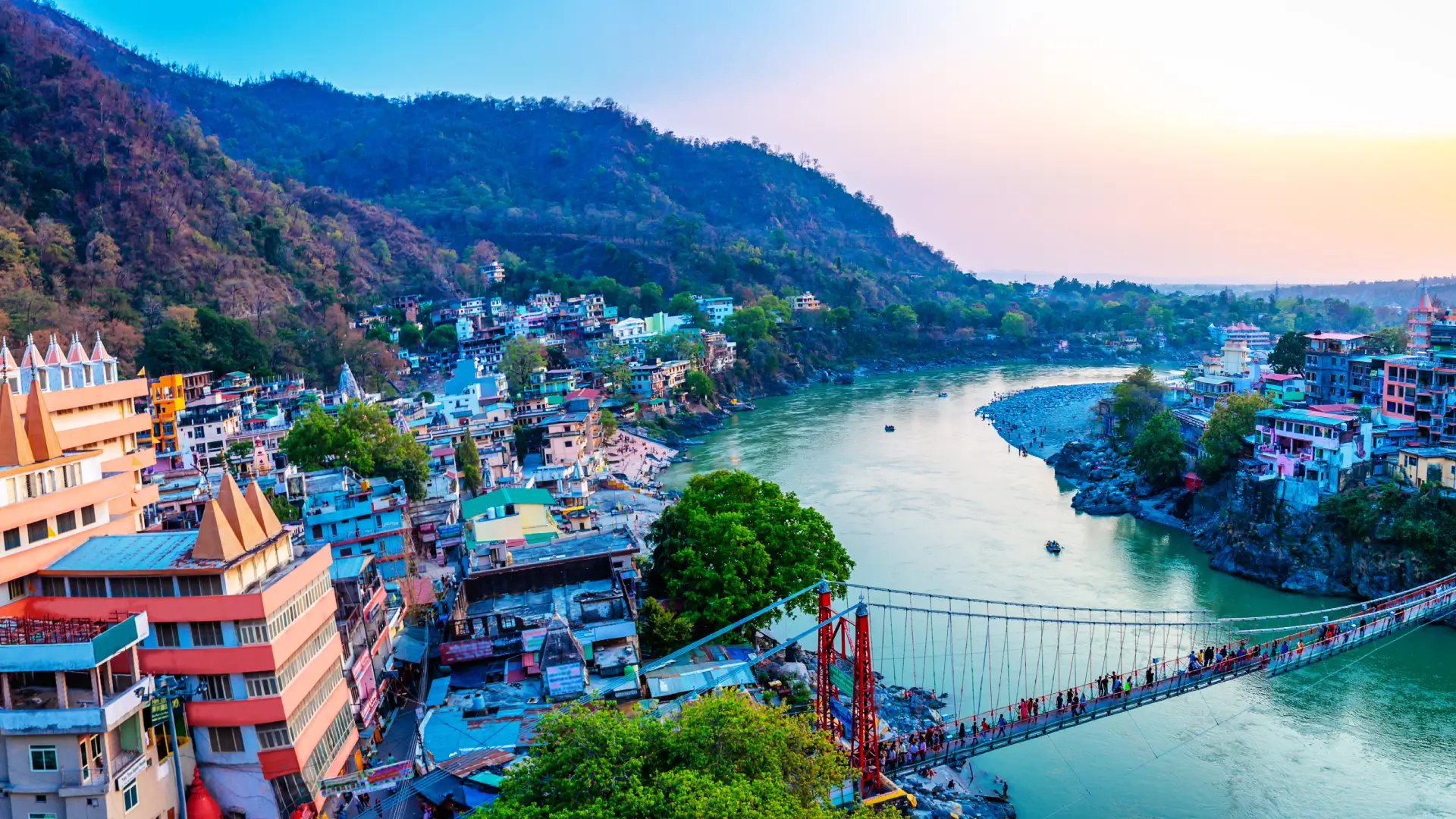
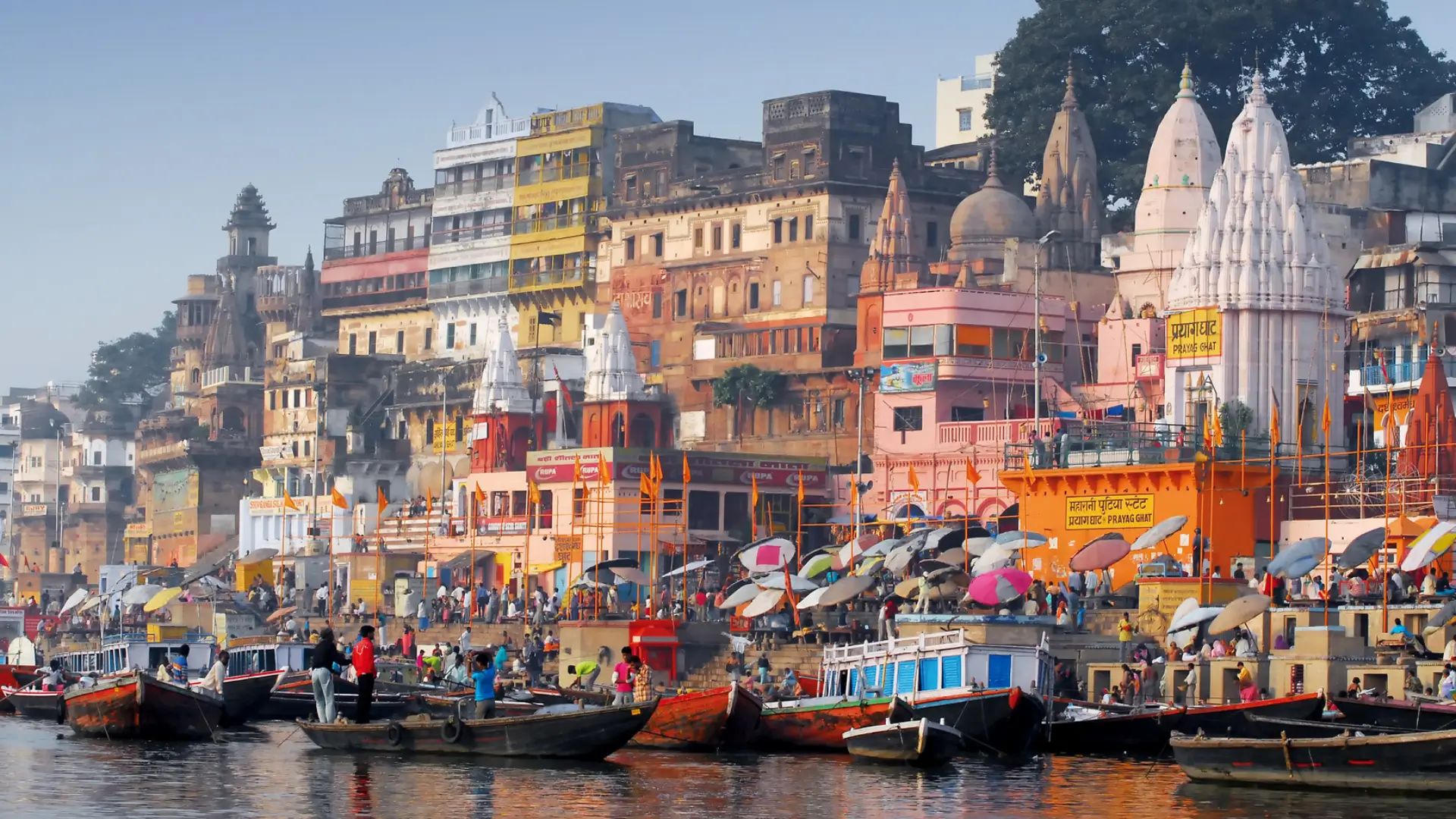
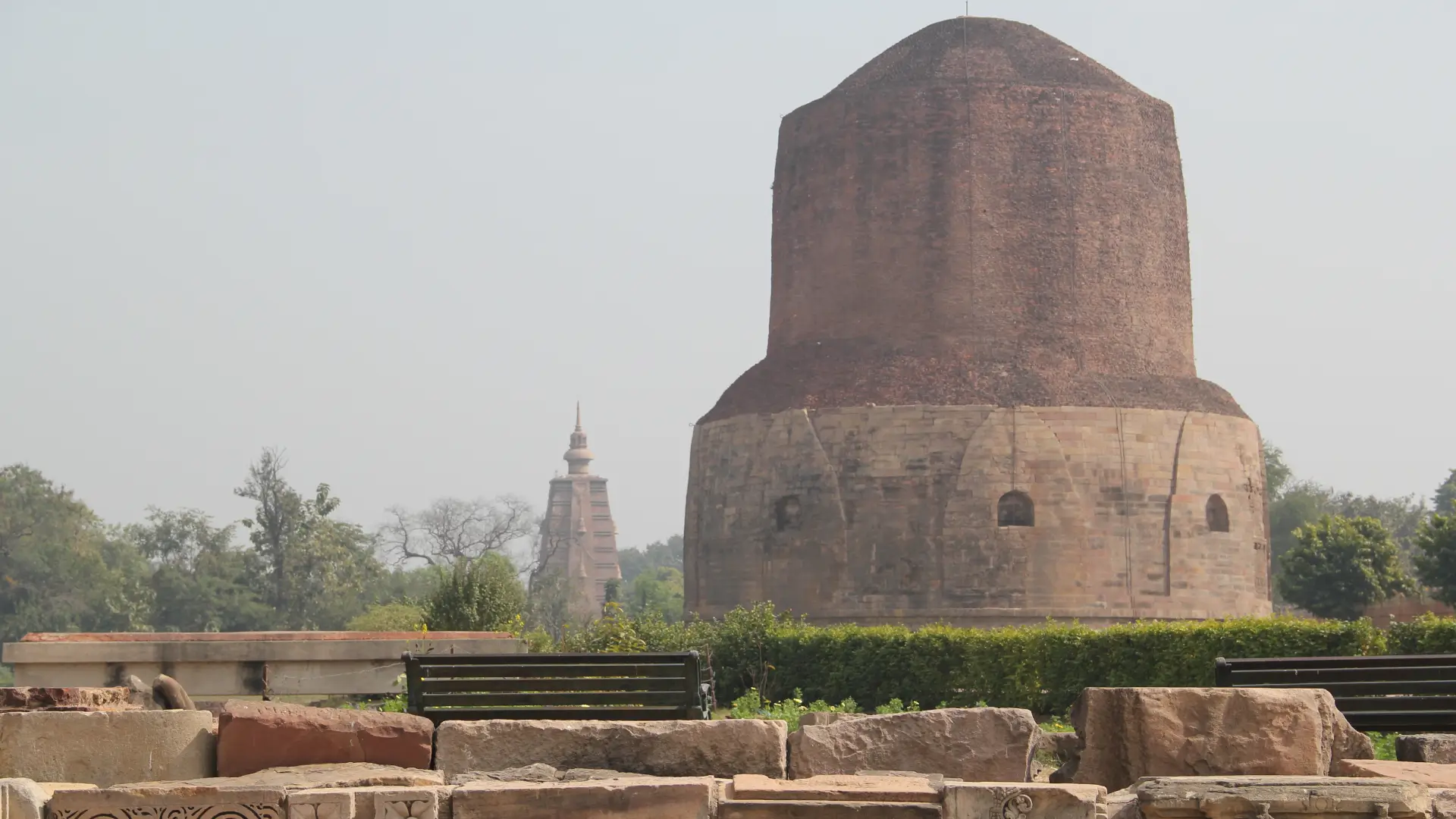
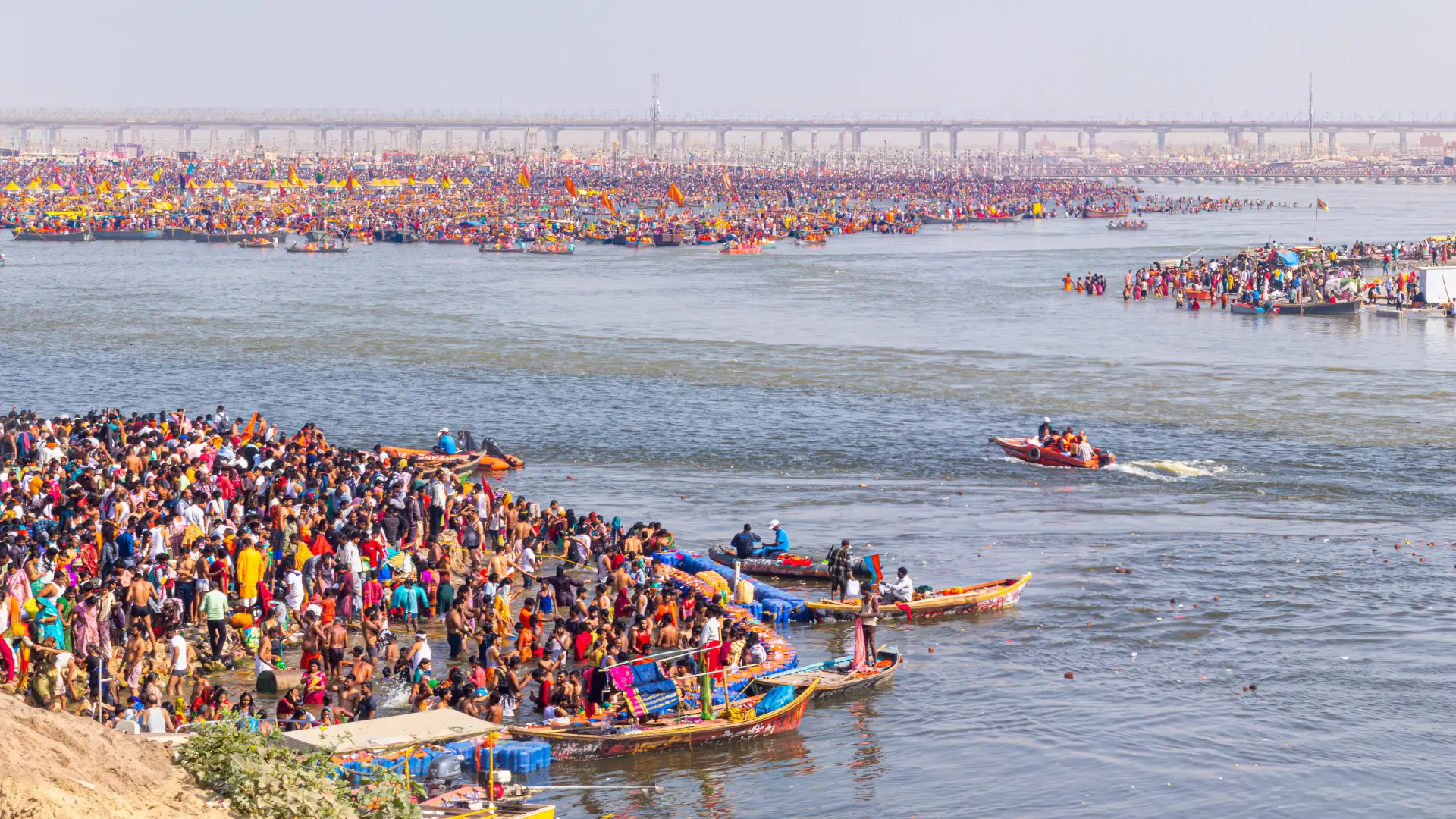
While visiting Ayodhya, the birthplace of Lord Rama, one can visit several other holy towns of the nation which carry a huge significance in the heart of Hindus and are widely recognised for their historical relevance are stated below.
Explore LocationsGet the Best Deals on Ayodhya Holiday Packages. Request for free quotes.
1 - 2 days are usually enough to cover major temples in Vrindavan like Banke Bihari Temple, Prem Mandir, and nearby areas at a comfortable pace.
Yes. Vrindavan and Mathura are just 15 km apart and are almost always visited together as part of a single itinerary.
Early morning or late evening is recommended. During peak hours, the curtain system and crowd movement can make darshan very brief and intense.